Your Boat Has 100+ Systems. How Many Do You Really Know?
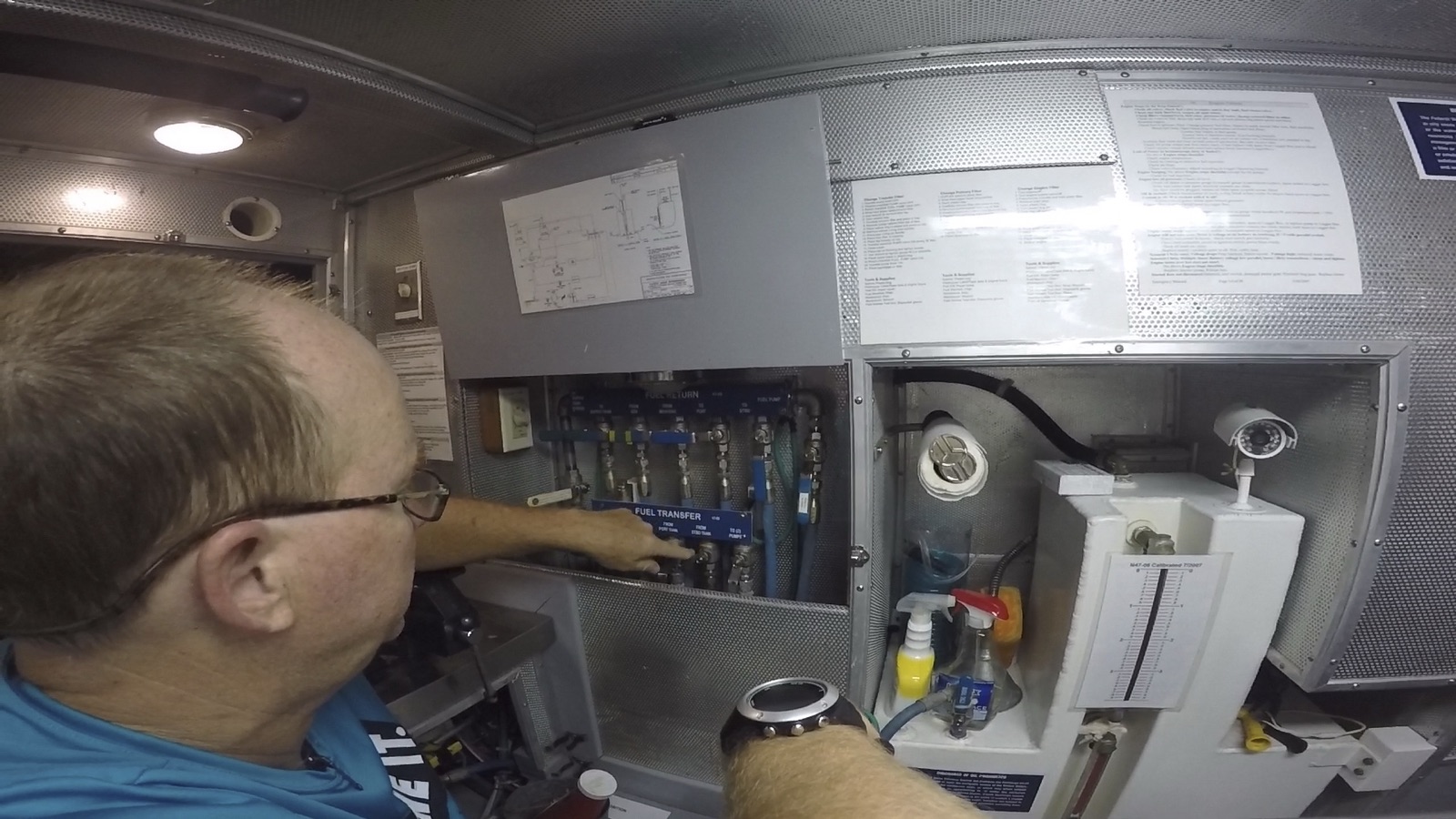
You've bought the boat, completed the surveys, signed the paperwork, and finally brought her home. You've probably spent a fair amount of time at the helm already, and you're starting to feel pretty comfortable with your new acquisition.
But how well do you really know your boat?
I'm not talking about knowing how to start the engines, operate the electronics, or turn on the air conditioning. I'm talking about knowing what's behind the panels, under the floorboards, and inside all those lockers you haven't opened yet.
I've owned and operated boats for more than 50 years, and one thing I've learned is that every boat has its own personality. Even two boats of the same make and model can be surprisingly different, especially after years of modifications by previous owners.
And sometimes you don't discover a piece of equipment until it breaks, or until you're trying to fix something else.
That's not the ideal time to learn what it does.
Take a Couple of Weeks and Explore
One of the best things you can do with a new-to-you boat is spend a couple of weeks systematically exploring every accessible part of it.
Start at one end and work your way to the other. I generally like to start at the bow and work aft, but the direction doesn't really matter. What matters is having a plan and being thorough.
Open the lockers. Lift the floorboards. Look behind removable panels. Explore the engine room, lazarette, and machinery spaces.
You'll probably find equipment you didn't even know you had.
Some of it will be obvious. A freshwater pump, a battery charger, or an air conditioning unit is usually easy enough to recognize.
Other things may leave you scratching your head.
What's that little pump mounted behind the water heater? Why are there three valves connected to that manifold? What's that mysterious electrical box with six wires going into it?
Don't assume that because something has been working for years, you understand what it does.
And don't assume that the previous owner installed everything the way the manufacturer originally intended.
Find the Things You'll Need in a Hurry
While you're exploring, pay particular attention to equipment and controls you might need during an emergency or equipment failure.
Where are the main battery switches? The fuel shutoff valves? The seacocks? The emergency bilge pumps?
Can you reach them quickly? Do you know which equipment they control?
What about the freshwater system? If a hose bursts, do you know how to isolate the affected section? If the air conditioning pump stops, can you find its breaker and seawater strainer?
It's one thing to know that your boat has these systems. It's another to know exactly where they are and how to access them.
I'd also recommend making sure anyone who regularly cruises with you knows the location of the most important safety equipment and shutoffs.
You don't want to be the only person aboard who knows how to turn something off in an emergency.
Take Pictures. Lots of Pictures.
Your phone is one of the best tools you have for learning a boat.
Take pictures of equipment installations, identification plates, plumbing arrangements, and electrical panels.
Record the manufacturer, model number, and serial number whenever possible.
A photograph of a pump's identification plate might not seem particularly exciting today. But six months from now, when you're trying to order a replacement part, you'll be glad you took it.
Photographs can also help you remember how equipment was arranged before a repair.
Just be careful not to disturb wiring, plumbing, or equipment while you're investigating. The goal is to become familiar with the boat, not to create another project.
What Is That Thing, Anyway?
Sooner or later, you're going to discover something you can't identify.
Maybe it's a small electronic module mounted behind the helm. Perhaps it's a pump or valve assembly that doesn't seem to have an obvious purpose.
This is where having organized equipment information and manuals becomes especially valuable.
Start by looking for a manufacturer's label or model number. Then check the equipment documentation.
If you're using YachtLedger™, you can consult the manuals stored in your vessel's Documents library or ask ASK YachtLedger for help understanding a particular piece of equipment.
For example, you might ask:
- What does this equipment do?
- How does it fit into my boat's systems?
- What maintenance does the manufacturer recommend?
- Where can I find the operating instructions?
The answers are most useful when the equipment has been properly identified and its documentation is available in your vessel's records.
And if you're dealing with an unfamiliar electrical, fuel, or other potentially hazardous system, don't start experimenting with switches or valves just to see what happens. Consult the documentation or a qualified technician first.
A good friend of mine tells a story that illustrates this point perfectly. He hired a captain to help move his new boat to its home port. While trying to figure out the fuel distribution system, the captain closed a valve without fully understanding what it controlled.
Unfortunately, that valve shut off the engine's excess fuel return line. The resulting pressure caused the fuel pump to literally blow a gasket, leaving a considerable mess in the engine room and costing the new owner several thousand dollars in repairs.
Even an experienced captain can make an expensive mistake when working with an unfamiliar system.
Learn How the Systems Work Together
As you become familiar with individual pieces of equipment, start thinking about how they work together.
Take the freshwater system as an example.
You probably know where the faucets are, and you may know where the freshwater pump is located. But what about the accumulator tank? The pressure switch? The filters? The valves that isolate different parts of the system?
If the pump suddenly starts cycling every few minutes, knowing how those components interact can make troubleshooting much easier.
The same is true of air conditioning, electrical distribution, fuel delivery, and engine cooling systems.
You don't need to become an expert on every piece of equipment aboard. But having a basic understanding of how the systems operate will make you a much more capable owner.
And when you do need professional assistance, you'll be better equipped to explain the problem.
Build a Record of What You Discover
As you work through the boat, keep track of what you find.
Equipment descriptions, model numbers, serial numbers, photographs, and manuals are all valuable information.
This is another area where YachtLedger can be useful.
Instead of keeping everything in scattered notebooks, photo albums, and folders on your computer, you can organize your equipment information in one place.
As you identify unfamiliar equipment, add it to your vessel's records. When you locate the correct manual, store it with your other documentation.
Over time, you're building something much more useful than an equipment list. You're creating a knowledge base for your boat.
That information will help you maintain the vessel, troubleshoot problems, order parts, and eventually provide valuable documentation to the next owner.
Don't Try to Learn Everything in One Weekend
Depending on the size and complexity of your boat, this process may take a while.
That's perfectly fine.
Spend a few hours exploring one area, take notes, and then move on to the next section another day.
If you discover something you don't understand, make a note and come back to it after you've had a chance to research it.
And don't be surprised if you discover modifications or equipment installations that aren't documented anywhere.
Boats have a way of accumulating changes over the years, and not every previous owner was particularly diligent about updating the manuals or drawings.
The important thing is to keep learning.
Learn It Before You Need It
I've always believed that one of the best ways to become comfortable with a boat is to spend time getting to know what's beneath the surface.
You may never need to troubleshoot that obscure pump behind the bulkhead or replace the relay you discovered under the helm.
But if you do, you'll be glad you already know where it is and what it does.
Because the worst time to learn about an unfamiliar system is when you're anchored in a remote harbor, something has stopped working, and everyone aboard is waiting for you to fix it.
Take the time to learn your boat before you need that knowledge.
It's time well spent.
Clark Haley is a yacht broker, lifelong boater, and founder of YachtLedger. He has spent more than 50 years owning, operating, maintaining, and cruising aboard sailboats and powerboats.