The Problem Isn't Knowing What to Do
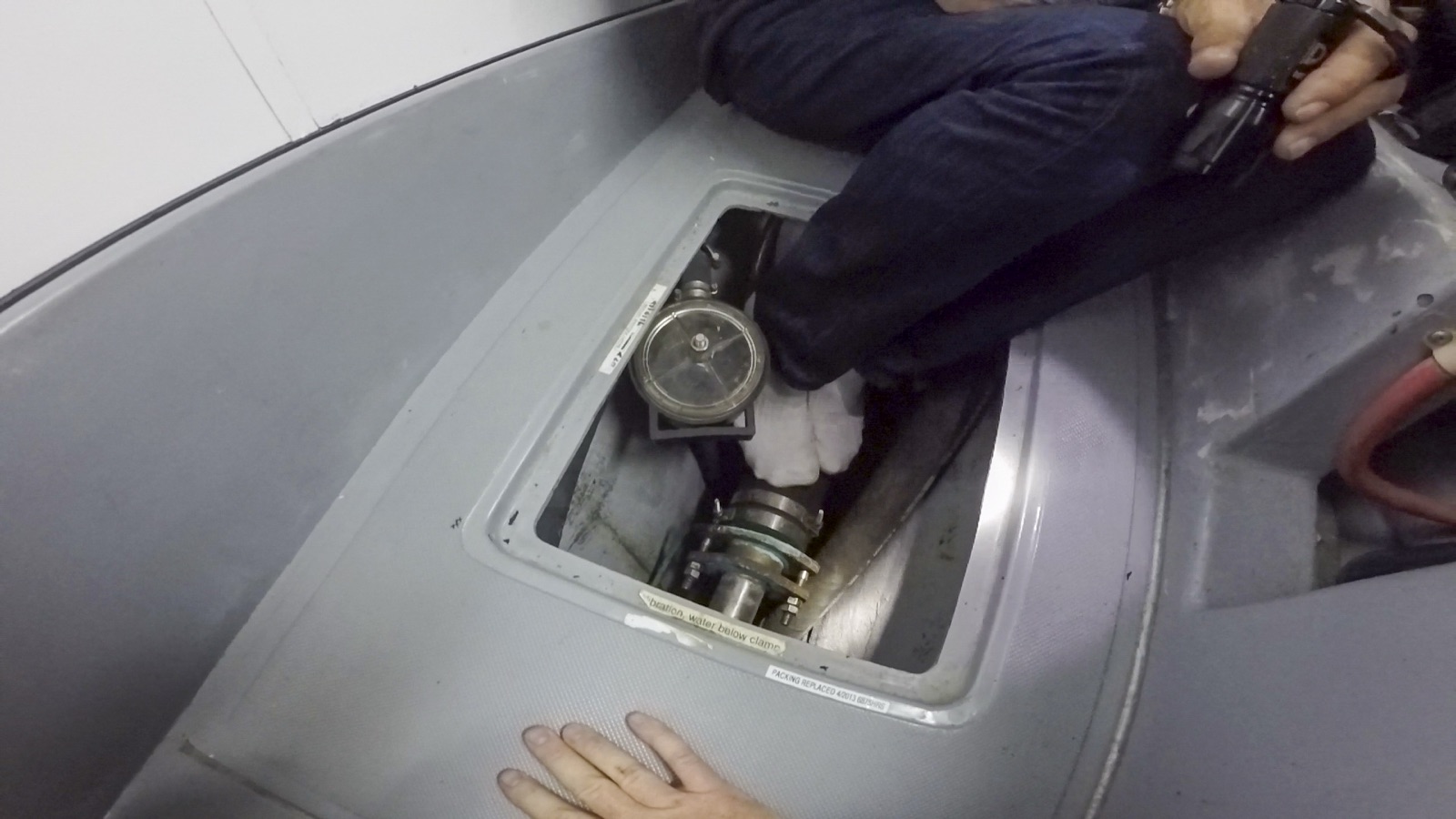
Most experienced boat owners understand the value of maintenance records.
We know we should keep them.
We know the engine manufacturer recommends service at certain intervals. We know pumps, filters, belts, batteries, and dozens of other components need periodic attention.
The problem isn't a lack of understanding.
It's that keeping the records often feels like another chore.
And after you've spent a Saturday afternoon wedged between an engine and a bulkhead, trying to reach a hose clamp that some engineer apparently thought would never need replacing, paperwork is not particularly appealing.
That's why I believe the solution has to be simple.
Really simple.
If entering a maintenance record requires filling out a complicated form, searching through menus, or remembering which spreadsheet contains the information, most of us aren't going to do it consistently.
I certainly won't.
The process needs to be quick enough that you'll actually do it while the details are still fresh in your mind.
That's One of the Reasons I Created YachtLedger™
I've spent a good part of my life around boats, and I know firsthand how much information there is to manage.
Equipment manuals. Maintenance schedules. Service histories. Part numbers. Receipts. Repairs. Upgrades. And all those little details that become important six months after you've forgotten them.
I wanted a better way to keep everything organized.
Not because I particularly enjoy recordkeeping.
Quite the opposite.
I wanted something that would make the recordkeeping so easy that even I would do it.
That's one of the ideas behind YachtLedger.
By organizing equipment information, maintenance schedules, and service records in one place, YachtLedger is designed to make it easier to keep track of what's been done and what needs attention next.
Instead of relying on memory or digging through old paperwork, you can build a maintenance history as you go.
And because that history is associated with your boat's equipment, it becomes more useful over time.
You can look back at previous service, see what was done, and have a better starting point the next time something needs attention.
The goal isn't to create more paperwork.
It's to make the information you already have easier to record, find, and use.
A Few Minutes Today Can Save Hours Tomorrow
You don't need to reconstruct every maintenance job performed since your boat was launched.
If your records are incomplete, start where you are.
The next time you change the engine oil, record the date, engine hours, oil type, filter part number, and what you did.
When you replace a pump, record the manufacturer, model, part number, and any installation details worth remembering.
When a mechanic performs work, keep the invoice and note which equipment was serviced.
If a repair reveals something unusual, write that down, too.
It doesn't have to be a novel.
A few useful details are far better than a perfect maintenance log that never gets updated.
And once you get into the habit, you'll gradually build a history that becomes more valuable every year.
Don't Rely on Your Memory. Trust Me.
I wish I could tell you that after 50 years of boating, I've developed a photographic memory for every repair I've ever made.
I haven't.
I can remember some pretty obscure details about boats I owned decades ago, yet I sometimes struggle to remember which impeller I installed last season.
That's just the way it is.
And with today's boats becoming more complicated, there's more information to keep track of than ever before.
You can be an excellent boat owner, take meticulous care of your equipment, and still be terrible at keeping records.
I know. I've been doing it for years.
But I'm determined to get better at it.
After all, I built YachtLedger partly to solve my own problem.
Now I just have to remember to use it.
Clark Haley is a yacht broker, lifelong boater, and founder of YachtLedger. He has spent more than 50 years owning, operating, maintaining, and cruising aboard sailboats and powerboats.